
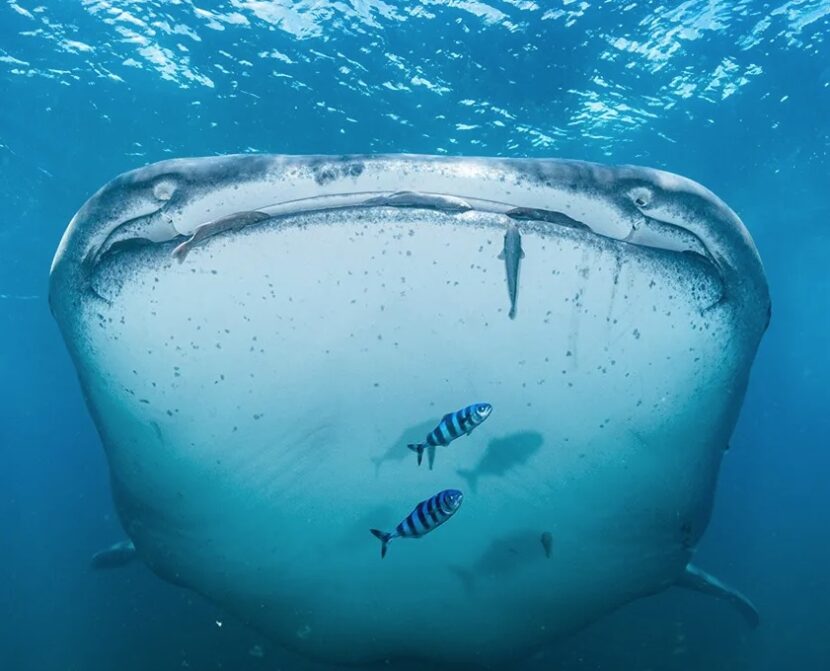
Humans have driven sharks to the brink of extinction, but it’s not too late to save them.
By Brianna Randall, published in Science News
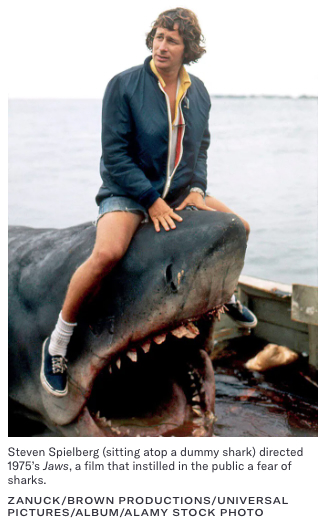
On June 20, 1975, a fictional great white shark stalked beachgoers on Amity Island — and struck terror into moviegoers around the world. Jaws, based on Peter Benchley’s best-selling novel, was a blockbuster. Its portrayal of sharks as bloodthirsty man-eaters bred widespread mistrust, fear and outright ill-will toward these animals.
In truth, you’re more likely to be struck by lightning than bitten by a shark. Millions of people swim in the seas each year, but an average of just 64 bites are recorded annually worldwide. And only 9 percent of those bites are fatal, equaling about six shark-inflicted deaths globally, according to the International Shark Attack File.
Rather than worrying about sharks while we frolic in the ocean this summer, we should instead fear for them. Sharks are keystone species that are vital to maintaining the health and resilience of the oceans. But since the 1970s, populations of the world’s sharks and their close cousins, rays, have declined by more than 70 percent, scientists reported in 2021. One-third of shark and ray species are threatened with extinction, according to a report released at the end of last year by the International Union for Conservation of Nature.
Although climate change, pollution and habitat destruction take a toll on sharks, the biggest peril they face is the humans who catch them. Overfishing has driven the decline of more than 90 percent of the 1,266 species assessed by the IUCN.
“Generally, people think that sharks are monsters — cold, unfeeling — and we don’t really have much compassion for them,” says Grant Smith, managing director of Sharklife, a research and education nonprofit in South Africa. “That just leaves them wide open to exploitation and harm.”
Steven Spielberg, the acclaimed director of Jaws, still feels responsible for turning humans against sharks. “That’s one of the things I still fear. Not to get eaten by a shark, but that sharks are somehow mad at me,” he said in an interview a few years ago. “I truly and to this day regret the decimation of the shark population because of the book and the film. I really, truly regret that.”
To save sharks, Smith and other advocates believe we need to flip the script, to think of sharks as awe-inspiring wildlife instead of food or foes. This requires concerted outreach about why sharks are more valuable alive than dead.
The shift in public perception of whales over the last half-century is one example of how this is possible. Once hunted nearly to extinction, these marine mammals are now protected in most parts of the world, and whale watching contributes more than $2 billion annually to the tourism economy.
Getting people to love sharks
As I kayaked up to a century-old family fishing camp on Isla Partida off Mexico’s Baja California, a dozen children were playing on a sandy spit beside the blue sea. Their fathers and uncles sat in the shade mending fishing nets, the fourth generation of Leóns to make a living by chasing fish — including sharks — from dawn to dusk. Most of them hope the children do not follow in their footsteps.
Paloma Aniló Calderón León, 15, wears a t-shirt with a hammerhead shark logo, framed by the name of a local conservation organization, Pelagios Kakunjá. She told me that she wants to be a marine biologist when she grows up. Her mother, Ana León, and father, Malaeel Salgado Calderón, are all for it. “Fishing is not a business, with the changes we’ve seen,” Calderón says. “There are very few fish left today.” Because it takes increasingly more time and more fuel to find sharks, he says, the profit from fishing is marginal at best.
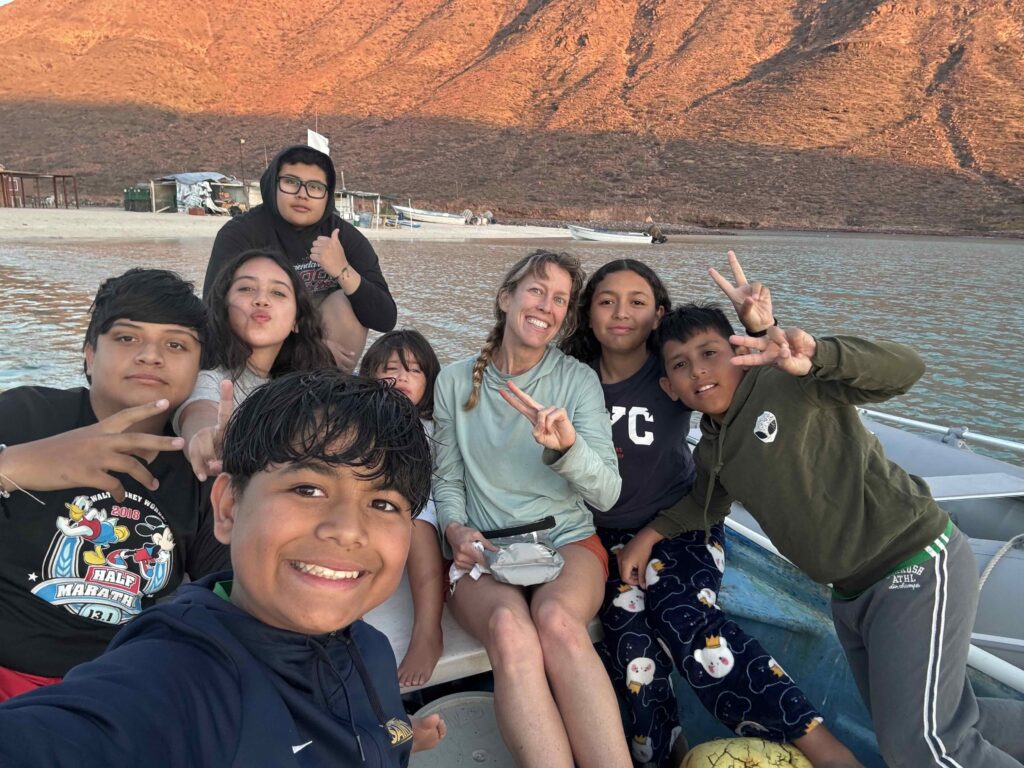
Now, Calderón hopes to get paid to study sharks instead of kill them. He and his family are part of a project led by Pelagios Kakunjá to train 30 fishers in Baja California as field technicians. Each will drive a boat to find the sharks, then collect blood and tissue samples, drop cameras to collect videos and place sensors underwater to track temperature and water chemistry. One of the species they are searching for is the scalloped hammerhead.
“Coming to Baja in the ’80s and ’90s, it was like going to the Galápagos. There were hammerheads everywhere,” says James Ketchum, a shark ecologist who cofounded Pelagios Kakunjá in 2010. The collapse of shark populations in Baja was sudden, he says. By 2012, “there was nothing, it was an empty lot,” Ketchum remembers. “I was basically crying underwater.” The number of scalloped hammerheads near Isla Partida declined 97 percent in the last 50 years, Ketchum and colleagues reported in Marine Policy in 2024. They cited overfishing as the primary cause.
In 2012, Mexico banned shark fishing from May through July each year to protect vulnerable species during the breeding season. And sharks have started to come back. Last year, researchers captured and tagged a juvenile hammerhead for the first time in Cabo Pulmo National Park, a marine protected area near the southern tip of Baja.