This story appeared October 6 in my Forbes column. You can sign up here to read my twice-monthly Forbes stories on the intersection of travel and science.
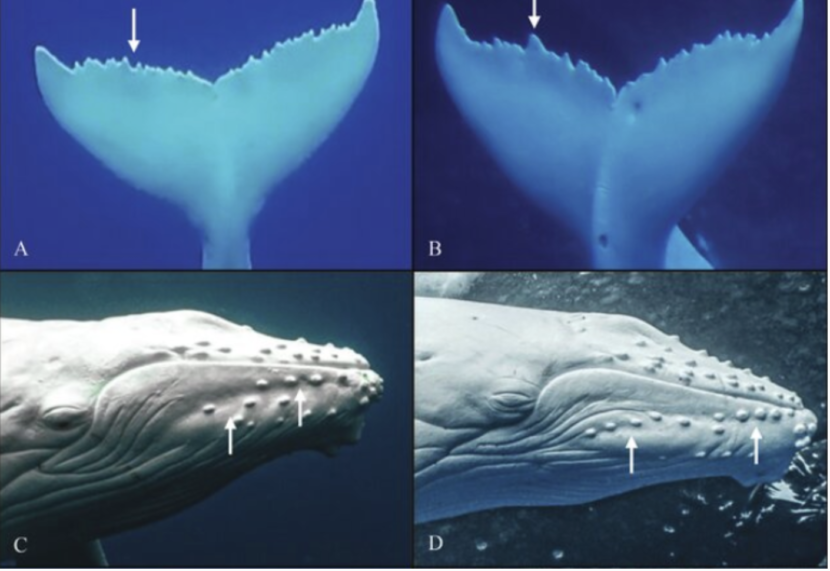
A flurry of excitement rippled through whale enthusiasts when two rare, all-white, baby humpbacks were spotted by tourists in the Kingdom of Tonga in 2024. These unrelated calves, nicknamed Siale and Mahina, were photographed frolicking beside their mothers in Tonga’s tropical waters.
A few of those images were uploaded to Happywhale, an AI platform founded in 2015 to identify and track marine mammals.
One year later, someone snapped a photo of a white humpback off New South Wales, Australia. Happywhale immediately identified it as Siale, reassuring fans that the young whale was still alive and well.
Happywhale now includes more than 1.6 million photos of whales, uploaded by 53,000 people from more than 100 countries. The platform identifies individual whales with a 97 to 99% accuracy rate by matching unique characteristics—like the markings on a fluke or the shape of a dorsal fin—to all images in the database.
“It’s like Facebook for whales,” Ted Cheeseman, the marine scientist who co-founded Happywhale, told me on a Zoom call. “It lets us open a door into the deep, vast ocean that we can’t perceive very well. With this platform, we can follow a whale and really see their journey.”
In July, Happywhale won the 2026 AI for Good Impact Award in the AI for planet category. The award acknowledges how the platform has revolutionized marine research by reducing the time it takes to identify a whale from days to seconds.
Plus, since it’s largely powered by citizens who upload photos during whale watching trips, the platform also presents a unique opportunity to directly engage tourists in conserving ocean wildlife.
Happywhale Streamlines Whale Research
In addition to connecting tourists to the whales they spot on vacation, Happywhale has also changed the game for marine biologists. The AI platform delivered “a thousand-fold increase in efficiency” in identifying animals, Cheeseman said.
One of the super-users of Happywhale is Conor Ryan, a naturalist with National Geographic Lindblad Expeditions and honorary research fellow at Scottish Association for Marine Science. Ryan has submitted more than 3,000 images to Happywhale of marine mammals he’s seen on expeditions in the North Atlantic and Antarctica.
Before Happywhale, Ryan had to identify whales the old-fashioned way.
“After a day’s fieldwork for my PhD studying fin whales off Ireland, I was uploading my pictures and cropping them, and then doing the arduous task of emailing colleagues all over the world saying, ‘Hey, have you seen this one? Do you recognize this one?’” Ryan told me in a phone interview.
Happywhale streamlined this “incredibly slow and very inefficient” process, Ryan said. More importantly, it gave scientists a global view of where whales migrate, eat, mate and congregate. This view grows clearer each day as more people around the world contribute images of whales.
Connecting Tourists To Whale Conservation
As a scientist, Ryan appreciates how the AI platform has leveled the playing field and encouraged collaboration among biologists in different parts of the globe.
“I submit everything to Happywhale in the hopes that one day all species will be able to be matched up. Plus, it’s a good backup for all my images, and then they’re available for other scientists to download and use.”
As a naturalist aboard small cruise ships, Ryan also values how Happywhale connects tourists to the animals they spot in the wild.
“Ten seconds after seeing a whale, we have a match and can tell our guests where it was seen last, whether it has a name, maybe even about its mother,” Ryan said. “That’s super powerful because it changes the whale from a random individual to one with a story and a history.”
Aboard Linblad Expeditions cruises, Ryan says they have “Happywhale happy hours”. Guests gather in the lounge, have a drink, and put the Happywhale map on a big screen to see where the whales they watched that day have been spotted previously.
Ryan encourages cruise ship guests to upload their own photos of whales, too. They automatically get an email update from Happywhale when that animal is spotted again.
“On some dark, horrible wintry morning, you’ll get an email and be like, ‘Hey, my whale is swimming around in the Cape Verde Islands’, which is wonderful,” Ryan said.